Japanese Adjectives at a Glance
- Japanese adjectives are mainly divided into い-adjectives and な-adjectives.
- い-adjectives usually end in い, while な-adjectives use な before a noun.
- This guide covers 100+ common Japanese adjectives for beginners.
Want to master Japanese adjectives?
You’ll need them if you want to speak more Japanese. Adjectives are the essential describing words in Japanese used to express qualities, states, and feelings.
This Japanese adjectives list gives you the top 100+ Japanese adjectives with kanji, hiragana, English meanings, and examples. You’ll also learn about -i vs -na Japanese adjectives and how to tell the difference. And if you want to learn Japanese online, check out our free bonus below.

|
Free PDF: Japanese Adjectives List Review the essential list of Japanese adjectives with their meanings, readings, and example sentences in this free PDF cheat sheet. Get the Free Japanese Adjectives List PDF |
Table of Contents
- Japanese Adjective Rules: I-Adjectives and Na-Adjectives
- How to Connect Japanese Adjectives
- Describing Dimension, Size, Distance & Number
- Describing Value
- Describing Sense
- Japanese Adjectives for Personality & Feelings
- Describing Speed, Difficulty, Importance, etc.
- Describing Colors
- Describing Shapes
- Describing Weather
- Japanese Adjectives for Food: Describing Taste
- Describing Situations
- Describing Physical Traits or Physical Conditions
- Describing Appearance and Condition
- Frequently Asked Questions
- Conclusion: How JapanesePod101 Will Teach You Japanese
1. Japanese Adjective Rules: I-Adjectives and Na-Adjectives
Before you get to the vocabulary, it’s good to know how Japanese adjectives work.
Japanese adjectives can appear before a noun or at the end of a sentence. The two Japanese adjective types are い-adjectives and な-adjectives, but you’ll also see a few noun-based and descriptive forms in the vocabulary list below.
Japanese Adjective Types at a Glance
Japanese adjectives are mainly divided into い-adjectives and な-adjectives. The vocabulary list also includes some noun-based expressions and descriptive forms that are useful for everyday Japanese.
- い-adjectives: Usually end in い in their dictionary form. They can directly modify a noun.
- Example: 大きい犬 (ōkii inu) — “big dog”
- At the end of a sentence: 犬は大きいです (inu wa ōkii desu) — “The dog is big.”
- な-adjectives: Use な before a noun.
- Example: 静かな部屋 (shizuka na heya) — “quiet room”
- At the end of a sentence, な is removed: 部屋は静かです (heya wa shizuka desu) — “The room is quiet.”
- Noun + の: Some descriptive words use の to modify a noun rather than な.
- Example: 緑の車 (midori no kuruma) — “green car”
- Descriptive expressions: Some entries are common descriptive forms, such as 怒った (okotta, “angry”) and きちんとした (kichin to shita, “neat”). These are useful expressions but are not standard dictionary-form い-adjectives or な-adjectives.
One common exception: きれい (kirei) ends in い but is a な-adjective. For example, きれいな部屋 (kirei na heya) means “clean room.”

2. How to Connect Japanese Adjectives
When listing several adjectives in Japanese, the form you use depends on whether the adjective is an い-adjective or a な-adjective.
For い-adjectives, replace the final い (i) with くて (kute).
- 大きい + 重い → 大きくて重い
- ōkii + omoi → ōkikute omoi
- “big and heavy”
For な-adjectives, replace な (na) with で (de) when connecting the adjectives.
- 静かな + きれいな → 静かできれいな
- shizuka na + kirei na → shizuka de kirei na
- “quiet and beautiful”
You can use these forms to connect two or more adjectives in the same sentence. For example, 大きくて静かな部屋 (ōkikute shizuka na heya) means “a big and quiet room.”
One important exception is いい (ii), meaning “good.” When connecting it to another adjective, いい changes to よくて (yokute). For example, よくて安い (yokute yasui) means “good and inexpensive.”
3. Describing Dimension, Size, Distance & Number
1- Vocabulary
| Reading | Kanji | Hiragana | English | Type | |
|---|---|---|---|---|---|
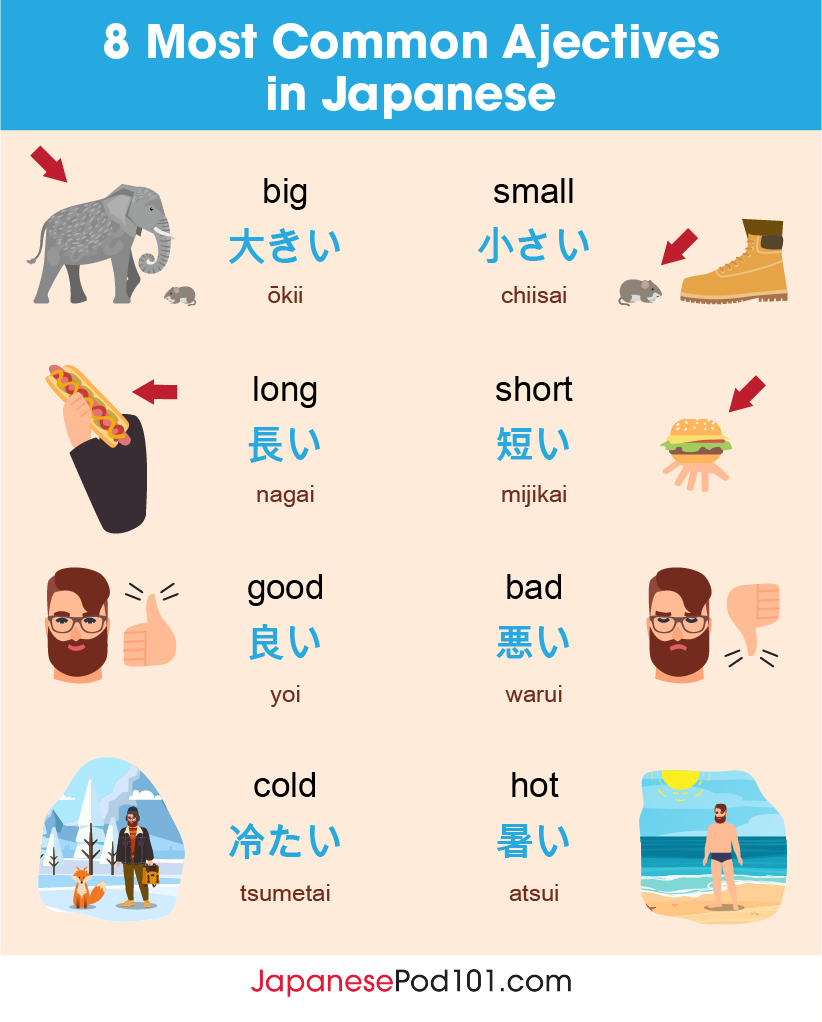
| 1 | ōkii | 大きい | おおきい | big | い-adjective |
| 2 | chiisai | 小さい | ちいさい | small | い-adjective |
| 3 | hiroi | 広い | ひろい | wide | い-adjective |
| 4 | semai | 狭い | せまい | narrow | い-adjective |
| 5 | takai | 高い | たかい | tall | い-adjective |
| 6 | hikui | 低い | ひくい | short; low | い-adjective |
| 7 | omoi | 重い | おもい | heavy | い-adjective |
| 8 | karui | 軽い | かるい | light | い-adjective |
| 9 | chikai | 近い | ちかい | close | い-adjective |
| 10 | tōi | 遠い | とおい | far | い-adjective |
| 11 | ōi | 多い | おおい | many | い-adjective |
| 12 | sukunai | 少ない | すくない | few | い-adjective |
Quick Tip: How to Say “Short” in Japanese — 低い (hikui) vs. 短い (mijikai)
Japanese uses two distinct words for “short” depending on what you are describing:
- 低い (hikui): Used for height or vertical altitude
- 背が低い se ga hikui – short in height / short stature
- 低い山 hikui yama – low/short mountain
- 短い (mijikai): Used for length or duration
- 短いスカート mijikai sukāto – short skirt
- 短い時間 mijikai jikan – a short period of time
2- Example Sentences
Here are simple Japanese sentences to read using these adjectives:
- 部屋に大きいベッドと小さい椅子があります。
- Heya ni ōkii beddo to chiisai isu ga arimasu.
- There is a big bed and a small chair in the room.
- このカバンは重いです。
- Kono kaban wa omoi desu.
- This bag is heavy.
- 駅はここから遠いです。
- Eki wa koko kara tōi desu.
- The station is far from here.
- あそこに高いビルがあります。
- Asoko ni takai biru ga arimasu.
- There is a tall building there.
If you’re looking for more printable study materials, visit our Free Japanese PDF lessons page.
4. Describing Value
1- Vocabulary
| Reading | Kanji | Hiragana | English | Type | |
|---|---|---|---|---|---|
| 13 | yoi | 良い | よい | good | い-adjective |
| 14 | warui | 悪い | わるい | bad | い-adjective |
| 15 | subarashii | 素晴らしい | すばらしい | great | い-adjective |
| 16 | hidoi | ひどい | ひどい | awful; terrible | い-adjective |
| 17 | utsukushii | 美しい | うつくしい | beautiful | い-adjective |
| 18 | minikui | 醜い | みにくい | ugly | い-adjective |
| 19 | kōka na | 高価な | こうかな | expensive | な-adjective |
| 20 | yasui | 安い | やすい | cheap | い-adjective |
2- Example Sentences
- 私はテストで良い結果を出した。
- Watashi wa tesuto de yoi kekka wo dashita.
- I got a good result on the test.
- そこから素晴らしい眺めが見えます。
- Soko kara subarashii nagame ga miemasu.
- You can see a great view from there.
- あの女性はとても美しいです。
- Ano josei wa totemo utsukushii desu.
- That lady is very beautiful.
- この安いカメラはすぐに壊れました。
- Kono yasui kamera wa sugu ni kowaremashita.
- This cheap camera broke instantly.
5. Describing Sense
1- Vocabulary
| Reading | Kanji | Hiragana | English | Type | |
|---|---|---|---|---|---|
| 21 | yawarakai | 柔らかい | やわらかい | soft | い-adjective |
| 22 | katai | 硬い・固い | かたい | hard | い-adjective |
| 23 | tsuyoi | 強い | つよい | strong | い-adjective |
| 24 | yowai | 弱い | よわい | weak | い-adjective |
| 25 | nameraka na | 滑らかな | なめらかな | smooth | な-adjective |
| 26 | arai | 荒い | あらい | rough | い-adjective |
| 27 | fukuzatsu na | 複雑な | ふくざつな | complicated | な-adjective |
2- Example Sentences
- この西陣織は柔らかい素材です。
- Kono Nishijin-ori wa yawarakai sozai desu.
- This Nishijin-ori is soft material.
- 彼女は強い男性が好きです。
- Kanojo wa tsuyoi dansei ga suki desu.
- She likes strong men.
- ダイヤモンドは硬い石です。
- Daiyamondo wa katai ishi desu.
- Diamond is a hard stone.
- その問題は複雑です。
- Sono mondai wa fukuzatsu desu.
- The problem is complicated.
6. Japanese Adjectives for Personality & Feelings
Looking for Japanese adjectives to describe a person? Here are the best Japanese adjectives to describe someone’s personality or feelings.
1- Vocabulary
| Reading | Kanji | Hiragana | English | Type | |
|---|---|---|---|---|---|
| 28 | omoshiroi | 面白い | おもしろい | funny; interesting | い-adjective |
| 29 | shitashimiyasui | 親しみやすい | したしみやすい | friendly | い-adjective |
| 30 | otonashii | 大人しい | おとなしい | quiet | い-adjective |
| 31 | ganko na | 頑固な | がんこな | stubborn | な-adjective |
| 32 | yasashii | 優しい | やさしい | amiable; thoughtful | い-adjective |
| 33 | ureshii | 嬉しい | うれしい | happy | い-adjective |
| 34 | kanashii | 悲しい | かなしい | sad | い-adjective |
| 35 | shakōteki na | 社交的な | しゃこうてきな | sociable | な-adjective |
| 36 | kodoku na | 孤独な | こどくな | lonely | な-adjective |
| 37 | okotta | 怒った | おこった | angry | descriptive expression |
2- Example Sentences
- 彼女は頑固な人です。
- Kanojo wa ganko na hito desu.
- She is a stubborn person.
- 私は面白い人が大好きです。
- Watashi wa omoshiroi hito ga daisuki desu.
- I really like a funny person.
- 試験に合格したので嬉しいです。
- Shiken ni gōkaku shita node ureshii desu.
- I am happy because I passed the exam.
- 彼は社交的な学生です。
- Kare wa shakōteki na gakusei desu.
- He is a sociable student.
7. Describing Speed, Difficulty, Importance, etc.
1- Vocabulary
| Reading | Kanji | Hiragana | English | Type | |
|---|---|---|---|---|---|
| 38 | hayai | 速い | はやい | fast | い-adjective |
| 39 | osoi | 遅い | おそい | slow | い-adjective |
| 40 | kantan na | 簡単な | かんたんな | easy | な-adjective |
| 41 | muzukashii | 難しい | むずかしい | difficult | い-adjective |
| 42 | jyūyō na | 重要な | じゅうような | important | な-adjective |
| 43 | atarashii | 新しい | あたらしい | new | い-adjective |
| 44 | furui | 古い | ふるい | old | い-adjective |
| 45 | majime na | 真面目な | まじめな | serious | な-adjective |
2- Example Sentences
- インターネットが遅いのでビデオ電話ができません。
- Intānetto ga osoi node bideo-denwa ga dekimasen.
- I can’t make a video-call because the internet is slow.
- これは簡単な問題です。
- Kore wa kantan na mondai desu.
- This is an easy problem.
- 私は新しい携帯電話が欲しいです。
- Watashi wa atarashii keitai denwa ga hoshii desu.
- I want a new mobile phone.
- 彼は真面目な会議で笑い出しました。
- Kare wa majime na kaigi de waraidashimashita.
- He started laughing at a serious meeting.
8. Describing Colors
1- Vocabulary
“Color” is iro in Japanese.
| Reading | Kanji | Hiragana | English | Type | |
|---|---|---|---|---|---|
| 46 | akai | 赤い | あかい | red | い-adjective |
| 47 | aoi | 青い | あおい | blue | い-adjective |
| 48 | midori no | 緑の | みどりの | green | noun + の |
| 49 | kiiroi | 黄色い | きいろい | yellow | い-adjective |
| 50 | kuroi | 黒い | くろい | black | い-adjective |
| 51 | shiroi | 白い | しろい | white | い-adjective |
| 52 | kurai | 暗い | くらい | dark | い-adjective |
| 53 | akarui | 明るい | あかるい | light; bright | い-adjective |
| 54 | azayaka na | 鮮やかな | あざやかな | vivid | な-adjective |
| 55 | bon’yari shita | − | ぼんやりした | dull | descriptive expression |
2- Example Sentences
- りんごは赤い種類と緑の種類があります。
- Ringo wa akai shurui to midori no shurui ga arimasu.
- Apples have a red kind and a green kind.
- 白いライオンを見たことがありますか。
- Shiroi raion o mita koto ga arimasu ka.
- Have you seen white lions?
- 私は暗い色の服が好きです。
- Watashi wa kurai iro no fuku ga suki desu.
- I like clothes with dark colors.
- その浴衣は鮮やかな色が特徴です。
- Sono yukata wa azayaka na iro ga tokuchō desu.
- That Yukata is characterized by vivid colors.
9. Describing Shapes
1- Vocabulary
“Shape” is katachi in Japanese.
| Reading | Kanji | Hiragana | English | Type | |
|---|---|---|---|---|---|
| 56 | marui | 丸い・円い | まるい | round | い-adjective |
| 57 | shikakui | 四角い | しかくい | square | い-adjective |
| 58 | sankaku no | 三角の | さんかくの | triangular | noun + の |
| 59 | chōhōkei no | 長方形の | ちょうほうけいの | rectangular | noun + の |
| 60 | kyūtai no | 球体の | きゅうたいの | spherical | noun + の |
| 61 | rippōtai no | 立方体の | りっぽうたいの | cubic | noun + の |
2- Example Sentences
- その丸い鏡を見てください。
- Sono marui kagami o mite kudasai.
- Please look at the round mirror.
- ゴミはあの四角い箱に入れてください。
- Gomi wa ano shikakui hako ni irete kudasai.
- Please put trash in that square garbage bin.
- 地球は球体の形をしています。
- Chikyū wa kyūtai no katachi o shite imasu.
- The earth has a spherical shape.
- この建築は立方体の形が有名です。
- Kono kenchiku wa rippōtai no katachi ga yūmei desu.
- This architecture is famous for its cubic shape.
10. Describing Weather
Here are some adjectives to help you talk about weather in Japanese.
1- Vocabulary
| Reading | Kanji | Hiragana | English | Type | |
|---|---|---|---|---|---|
| 62 | atsui | 暑い | あつい | hot | い-adjective |
| 63 | samui | 寒い | さむい | cold | い-adjective |
| 64 | mushimushi shita | 蒸し蒸しした | むしむしした | humid | descriptive expression |
| 65 | atatakai | 暖かい | あたたかい | warm | い-adjective |
| 66 | hadazamui | 肌寒い | はだざむい | chilly | い-adjective |
2- Example Sentences
- 今日は寒いので手袋を持って行ってください。
- Kyō wa samui node tebukuro o motte itte kudasai.
- Please take gloves with you because today is cold.
- 夏は30度を超える暑い日が続きます。
- Natsu wa 30-do o koeru atsui hi ga tsuzukimasu.
- Hot days with over 30 degrees continue in summer.
- 春は暖かい気候で花見ができます。
- Haru wa atatakai kikō de hanami ga dekimasu.
- Spring has a warm climate, and flowers bloom.
- 昨日は肌寒い日でした。
- Kinō wa hadazamui hi deshita.
- Yesterday was chilly.
To learn more about weather, please visit our article all about Japanese Weather.
11. Japanese Adjectives for Food: Describing Taste
Here are the most common and important Japanese adjectives for describing food and taste!
1- Vocabulary
| Reading | Kanji | Hiragana | English | Type | |
|---|---|---|---|---|---|
| 67 | amai | 甘い | あまい | sweet | い-adjective |
| 68 | shiokarai | 塩辛い | しおからい | salty | い-adjective |
| 69 | suppai | 酸っぱい | すっぱい | sour | い-adjective |
| 70 | nigai | 苦い | にがい | bitter | い-adjective |
| 71 | karai | 辛い | からい | spicy; hot | い-adjective |
| 72 | oishii | 美味しい | おいしい | delicious; tasty | い-adjective |
| 73 | mazui | 不味い | まずい | tastes bad | い-adjective |
2- Example Sentences
- 私は甘いものが大好きです。
- Watashi wa amai mono ga daisuki desu.
- I like sweets very much.
- この梅干しは塩辛いので食べられません。
- Kono umeboshi wa shiokarai node taberaremasen.
- I can’t eat this Umeboshi because it’s salty.
- 彼は苦いコーヒーが好きです。
- Kare wa nigai kōhī ga suki desu.
- He likes bitter coffee.
- 明日は記念日なので美味しいものを食べたい。
- Ashita wa kinenbi na node oishii mono o tabetai.
- I want to eat something delicious because tomorrow is an anniversary.
12. Describing Situations
1- Vocabulary
| Reading | Kanji | Hiragana | English | Type | |
|---|---|---|---|---|---|
| 74 | tanoshii | 楽しい | たのしい | fun | い-adjective |
| 75 | tsumaranai | − | つまらない | boring | い-adjective |
| 76 | anzen na | 安全な | あんぜんな | safe; secure | な-adjective |
| 77 | kiken na | 危険な | きけんな | dangerous | な-adjective |
| 78 | kinkyū no | 緊急の | きんきゅうの | urgent | noun + の |
| 79 | ochitsuita | 落ち着いた | おちついた | calm | descriptive expression |
| 80 | tadashii | 正しい | ただしい | correct; right | い-adjective |
| 81 | ayamatta | 誤った | あやまった | wrong | descriptive expression |
2- Example Sentences
- これは安全な調理器具です。
- Kore wa anzen na chōri kigu desu.
- This is safe cooking equipment.
- 私はつまらない映画で寝落ちしました。
- Watashi wa tsumaranai eiga de neochi shimashita.
- I fell asleep during the boring movie.
- 彼は危険な橋を渡りました。
- Kare wa kiken na hashi o watarimashita.
- He crossed a dangerous bridge.
- いつも正しい行いをしなさい。
- Itsumo tadashii okonai o shinasai.
- Always do the right things.
13. Describing Physical Traits or Physical Conditions
1- Vocabulary
| Reading | Kanji | Hiragana | English | Type | |
|---|---|---|---|---|---|
| 82 | wakai | 若い | わかい | young | い-adjective |
| 83 | toshioita | 年老いた | としおいた | old | descriptive expression |
| 84 | genki na | 元気な | げんきな | lively | な-adjective |
| 85 | byōki no | 病気の | びょうきの | sick | noun + の |
| 86 | kirei na | 綺麗な | きれいな | clean; beautiful | な-adjective |
| 87 | kitanai | 汚い | きたない | dirty | い-adjective |
| 88 | suteki na | 素敵な | すてきな | nice | な-adjective |
| 89 | hen na | 変な | へんな | strange; odd | な-adjective |
| 90 | seijō na | 正常な | せいじょうな | normal | な-adjective |
| 91 | ijō na | 異常な | いじょうな | abnormal | な-adjective |
2- Example Sentences
- 「若い時の苦労は買ってでもせよ」ということわざがある。
- “Wakai toki no kurō wa katte demo seyo” to iu kotowaza ga aru.
- There is a proverb saying “Heavy work in youth is quiet in old age.”
- あの女性は素敵な靴を履いています。
- Ano josei wa suteki na kutsu o haite imasu.
- That lady wears nice shoes.
- 異常な症状が出たらすぐに電話してください。
- Ijō na shōjō ga detara sugu ni denwa shite kudasai.
- If abnormal symptoms appear, please call me immediately.
14. Describing Appearance and Condition
1- Vocabulary
| Reading | Kanji | Hiragana | English | Type | |
|---|---|---|---|---|---|
| 92 | kawaii | 可愛い | かわいい | pretty; cute | い-adjective |
| 93 | kichin to shita | − | きちんとした | neat | descriptive expression |
| 94 | miryokuteki na | 魅力的な | みりょくてきな | attractive | な-adjective |
| 95 | miryoku no nai | 魅力のない | みりょくのない | unattractive | descriptive expression |
| 96 | futotta | 太った | ふとった | fat | descriptive expression |
| 97 | yaseta | 痩せた | やせた | lean; thin | descriptive expression |
| 98 | okanemochi na | お金持ちな | おかねもちな | rich | な-adjective |
| 99 | mazushii | 貧しい | まずしい | poor | い-adjective |
| 100 | heikinteki na | 平均的な | へいきんてきな | average | な-adjective |
2- Example Sentences
- 彼女はいつもきちんとした服を着ています。
- Kanojo wa itsumo kichin to shita fuku o kite imasu.
- She always wears neat clothes.
- 私は平均的な家出身です。
- Watashi wa heikinteki na ie shusshin desu.
- I am from an average family.
- 貧しい子供達のために募金をしてください。
- Mazushii kodomo-tachi no tame ni bokin o shite kudasai.
- Please donate for poor children.
15. Frequently Asked Questions
What is “adjective” in Japanese?
The Japanese word for adjective is 形容詞 (keiyōshi).
Do all Japanese adjectives end in い?
No. Many い-adjectives end in い, but な-adjectives such as 親切 (shinsetsu) and きれい (kirei) are not い-adjectives. きれい is a な-adjective even though it ends in い.
Is 小さい (chiisai) a な-adjective?
No. 小さい (chiisai) is an い-adjective, not a な-adjective.
How do you say “big” in Japanese?
Big in Japanese is 大きい (ōkii) and written as おおきい in hiragana.
Where do Japanese adjectives go?
Japanese adjectives go before a noun or at the end of a sentence.
Is “Japanese” an adjective?
In English, “Japanese” is a proper adjective. In the Japanese language, you use the noun 日本 (Nihon, meaning Japan) plus the Japanese particle の (no). 日本の (Nihon no), as in 日本の車 (Nihon no kuruma) becomes “Japanese car.”
16. Conclusion: How JapanesePod101 Will Teach You Japanese
In this Japanese adjectives lesson, we introduced the top 100+ Japanese adjectives with examples.
If you’d like to learn more about the Japanese language, then join us at JapanesePod101 and we’ll get you speaking Japanese from your very first lesson. JapanesePod101 takes you from lesson 1 to 2 to 3 to conversational fluency.
Just click here to sign up for your Free Lifetime account today!