Stepping into one of Tokyo’s world-class museums – whether it’s the Tokyo National Museum in Ueno or the Mori Art Museum in Roppongi – can be an incredible experience. But if you’re just starting your Japanese journey, it can also feel a little daunting. How do you buy a ticket, find an ukiyo-e display, or understand the rules about taking photos?
You don’t need to be fluent to have a smooth, enjoyable museum visit. This guide covers the essential Japanese phrases and vocabulary you’ll need, from buying your ticket to finding exhibits and asking about the art. The Japanese word for “art museum” is 美術館 (bijutsukan).
Table of Contents
Essential Polite Phrases at a Museum
A few polite expressions will help you start interactions with museum staff naturally.
| Japanese | Romaji | English |
|---|---|---|
| すみません。 | Sumimasen. | “Excuse me.” |
| お願いします。 | Onegai shimasu. | “Please.” / “I’d like this, please.” |
| ありがとうございます。 | Arigatō gozaimasu. | “Thank you very much.” |
When you enter, staff may greet you with いらっしゃいませ (Irasshaimase), meaning “Welcome.” You don’t need to reply verbally; a small nod is fine.
Here’s how Anna asks where to buy a ticket:
Anna: すみません。チケット売り場はどこですか。
Sumimasen. Chiketto uriba wa doko desu ka?
“Excuse me. Where is the ticket counter?”Museum Employee: まっすぐ行って、右です。
Massugu itte, migi desu.
“Go straight, and it’s on the right.”Anna: ありがとうございます。
Arigatō gozaimasu.
“Thank you very much.”
Buying Tickets and Asking About Prices
Once you’ve found the チケット売り場 (chiketto uriba), or “ticket counter,” these phrases will help you buy admission from a staff member. At a self-service machine, you’ll also recognize some of the same ticket and price vocabulary on the screen.
| Japanese | Romaji | English |
|---|---|---|
| チケットを一枚お願いします。 | Chiketto o ichimai onegai shimasu. | “One ticket, please.” |
| 大人一枚お願いします。 | Otona ichimai onegai shimasu. | “One adult ticket, please.” |
| 二枚お願いします。 | Nimai onegai shimasu. | “Two tickets, please.” |
| いくらですか。 | Ikura desu ka? | “How much is it?” |
| 学生料金はありますか。 | Gakusei ryōkin wa arimasu ka? | “Is there a student rate?” |
| カードは使えますか。 | Kādo wa tsukaemasu ka? | “Can I pay by card?” |
The counter 枚 (mai) is used for flat, thin objects, including tickets. You can change the number as needed: 一枚 (ichimai, “one”), 二枚 (nimai, “two”), 三枚 (sanmai, “three”), 四枚 (yonmai, “four”), and so on.
Here’s Leo at the counter while Anna checks the museum map:
Leo: すみません。大人二枚お願いします。
Sumimasen. Otona nimai onegai shimasu.
“Excuse me. Two adult tickets, please.”Ticket Agent: はい、二千円になります。
Hai, nisen-en ni narimasu.
“That will be 2,000 yen.”Leo: カードは使えますか。
Kādo wa tsukaemasu ka?
“Can I use a card?”Ticket Agent: はい、ご利用いただけます。
Hai, go-riyō itadakemasu.
“Yes, you can.”
Asking About Audio Guides and Guided Tours
Audio guides and guided tours can add more context to your visit. Here are some useful questions:
| Japanese | Romaji | English |
|---|---|---|
| 英語の音声ガイドはありますか。 | Eigo no onsei gaido wa arimasu ka? | “Is there an audio guide in English?” |
| 音声ガイドはどこで借りられますか。 | Onsei gaido wa doko de kariraremasu ka? | “Where can I get an audio guide?” |
| ガイドツアーはありますか。 | Gaido tsuā wa arimasu ka? | “Are there guided tours?” |
| 何時に始まりますか。 | Nanji ni hajimarimasu ka? | “What time does it start?” |
Anna decides an audio guide would be helpful:
Anna: すみません。英語の音声ガイドはありますか。
Sumimasen. Eigo no onsei gaido wa arimasu ka?
“Excuse me. Is there an audio guide in English?”Staff Member: はい、ございます。あちらのインフォメーションカウンターで貸し出しております。
Hai, gozaimasu. Achira no infomēshon kauntā de kashidashi shite orimasu.
“Yes. They’re available for loan at the information counter over there.”Anna: 分かりました。ありがとうございます。
Wakarimashita. Arigatō gozaimasu.
“I see. Thank you very much.”
Finding Exhibits, Rooms, and Museum Facilities
Tokyo’s major museums can be large, so one of the most useful patterns to know is:
〜はどこですか。
… wa doko desu ka?
“Where is …?”
You can simply replace the blank with what you’re looking for:
| Japanese | Romaji | English |
|---|---|---|
| 特別展はどこですか。 | Tokubetsuten wa doko desu ka? | “Where is the special exhibition?” |
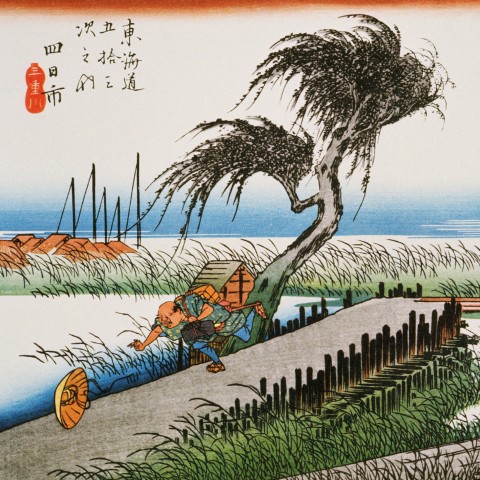
| 浮世絵の展示はどこですか。 | Ukiyo-e no tenji wa doko desu ka? | “Where is the ukiyo-e exhibit?” |
| トイレはどこですか。 | Toire wa doko desu ka? | “Where is the restroom?” |
| コインロッカーはどこですか。 | Koin rokkā wa doko desu ka? | “Where are the coin lockers?” |
| 出口はどこですか。 | Deguchi wa doko desu ka? | “Where is the exit?” |
Some other useful museum words are:
| Japanese | Romaji | English |
|---|---|---|
| 入口 | iriguchi | “entrance” |
| エレベーター | erebētā | “elevator” |
| ミュージアムショップ | myūjiamu shoppu | “museum shop” |
And here are some replies you may hear:
| Japanese | Romaji | English |
|---|---|---|
| まっすぐ行ってください。 | Massugu itte kudasai. | “Go straight.” |
| 右です。 | Migi desu. | “It’s on the right.” |
| 左です。 | Hidari desu. | “It’s on the left.” |
| 二階です。 | Nikai desu. | “It’s on the second floor.” |
Leo is trying to find the sculpture gallery:
Leo: すみません。彫刻展示室はどこですか。
Sumimasen. Chōkoku tenjishitsu wa doko desu ka?
“Excuse me. Where is the sculpture gallery?”Museum Guard: 三階です。エレベーターで三階まで行って、左にあります。
Sankai desu. Erebētā de sankai made itte, hidari ni arimasu.
“It’s on the third floor. Take the elevator to the third floor, and it’s on the left.”Leo: ありがとうございます。
Arigatō gozaimasu.
“Thank you very much.”
If you’re planning a museum day in Ueno, JapanesePod101’s Exploring Ueno – Things to Do in Tokyo gives you more context on an area known for its museums and cultural attractions.
Understanding Museum Rules
Photography and other rules can vary by museum, exhibition, and even individual artwork, so check posted signs or ask staff when you’re unsure.
Common Signs and Instructions
| Japanese | Romaji | English |
|---|---|---|
| 写真撮影禁止 | Shashin satsuei kinshi | “No photography.” |
| フラッシュ撮影禁止 | Furasshu satsuei kinshi | “No flash photography.” |
| 飲食禁止 | Inshoku kinshi | “No eating or drinking.” |
| 作品には触れないでください。 | Sakuhin ni wa furenai de kudasai. | “Please don’t touch the artworks.” |
| お静かにお願いします。 | O-shizuka ni onegai shimasu. | “Please keep quiet.” |
Asking for Clarification
| Japanese | Romaji | English |
|---|---|---|
| 写真を撮ってもいいですか。 | Shashin o totte mo ii desu ka? | “May I take photos?” |
| フラッシュを使ってもいいですか。 | Furasshu o tsukatte mo ii desu ka? | “May I use flash?” |
Anna sees an installation she would like to photograph:
Anna: すみません。ここで写真を撮ってもいいですか。
Sumimasen. Koko de shashin o totte mo ii desu ka?
“Excuse me. Is it okay to take photos here?”Museum Guard: はい、大丈夫ですが、フラッシュ撮影はご遠慮ください。
Hai, daijōbu desu ga, furasshu satsuei wa go-enryo kudasai.
“Yes, that’s fine, but please refrain from using flash.”Anna: 分かりました。ありがとうございます。
Wakarimashita. Arigatō gozaimasu.
“I understand. Thank you very much.”
When speaking with museum staff, using polite Japanese with です/ます (desu/masu) forms and beginning a question with すみません (sumimasen) is a safe and respectful approach.
Talking About the Art: Simple Questions and Reactions
Having a few simple phrases for asking about an artwork or sharing your reaction can make the visit more engaging.
Asking About an Artwork
| Japanese | Romaji | English |
|---|---|---|
| これは何ですか。 | Kore wa nan desu ka? | “What is this?” |
| これは誰の作品ですか。 | Kore wa dare no sakuhin desu ka? | “Whose work is this?” |
| これはいつ頃の作品ですか。 | Kore wa itsugoro no sakuhin desu ka? | “About when was this work made?” |
| この作品のタイトルは何ですか。 | Kono sakuhin no taitoru wa nan desu ka? | “What is the title of this work?” |
| この絵は誰が描きましたか。 | Kono e wa dare ga kakimashita ka? | “Who painted this?” |
Sharing Your Reactions
| Japanese | Romaji | English |
|---|---|---|
| すごいですね。 | Sugoi desu ne. | “It’s amazing.” / “It’s impressive.” |
| きれいですね。 | Kirei desu ne. | “It’s beautiful.” |
| 面白いですね。 | Omoshiroi desu ne. | “It’s interesting.” |
| 色がきれいですね。 | Iro ga kirei desu ne. | “The colors are beautiful.” |
The phrases above are polite and useful with people you don’t know. Anna and Leo are friends, so their conversation naturally sounds more casual:
Anna: わあ、すごい!色がすごくきれい。
Wā, sugoi! Iro ga sugoku kirei.
“Wow, amazing! The colors are so beautiful.”Leo: 本当だね。面白いね。これ、誰の作品だろう?
Hontō da ne. Omoshiroi ne. Kore, dare no sakuhin darō?
“You’re right. It’s interesting. I wonder whose work this is.”Anna: 作品の説明を見てみよう。あ、ここに作家の名前が書いてあるよ。
Sakuhin no setsumei o mite miyō. A, koko ni sakka no namae ga kaite aru yo.
“Let’s look at the information about the work. Ah, the artist’s name is written here.”
You’re Ready for Your Museum Visit
With these phrases, you can buy tickets, ask about audio guides, find exhibits and facilities, understand basic museum rules, and ask simple questions about the art. You don’t need perfect Japanese to make your visit smoother – a few well-chosen phrases can go a long way.
Want to practice with a museum-specific Japanese lesson next?
Continue with The Art Museum on JapanesePod101.com.