Picture this: you’re in a small izakaya in Tokyo, the TV in the corner is showing a baseball game, and suddenly the whole room cheers. Or you’re at a friend’s home in August, and the family is glued to a high school baseball game as if it were the World Series. Chances are, you’ve just met one of Japan’s great passions: sports.
Japanese sports are a fascinating mix of modern and ancient: packed baseball stadiums with brass bands, sumo rituals that go back centuries, and martial arts the whole world now practices. This guide gives you the context and the exact Japanese words you need to join in: the big teams, the famous rivalry, sumo basics, and what to shout when your team scores.
Japanese Sports: Quick Reference
野球 (YAKYŪ)
BASEBALL
Japanese sports in one line
Baseball is the national pastime, soccer is a close second, sumo is the ancient tradition, and martial arts like judo were born here. The rivalry everyone knows: Giants vs Tigers.
Four big names to know
| Team / event | Sport | Why it matters |
|---|---|---|
| 読売ジャイアンツ (Yomiuri Giants) | Baseball | Tokyo’s most famous team, based at Tokyo Dome |
| 阪神タイガース (Hanshin Tigers) | Baseball | Kansai’s team, with some of Japan’s most passionate fans |
| 甲子園 (Kōshien) | High school baseball | The national tournament that stops the country every summer |
| 大相撲 (Ōzumō) | Sumo | Six grand tournaments a year, three of them in Tokyo |
Golden phrase: どのチームを応援していますか? (dono chīmu o ōen shite imasu ka?) “Which team do you support?”
Table of Contents
- Your Instant Japanese Sports Cheat Sheet
- Baseball (野球): Japan’s National Pastime
- Giants vs Tigers: The Rivalry That Divides Japan
- Sumo (相撲): Japan’s Ancient Sport
- Soccer and the Other Sports Japan Loves
- Martial Arts: Born in Japan
- Joining the Conversation: Cheers and Small Talk
- Quiz: Are You Ready for Game Day?
- Japanese Sports FAQ
- Final Thoughts
1. Your Instant Japanese Sports Cheat Sheet
Before the rivalries and rituals, get the essential words on your team. These are the words you’ll hear on TV, read in the sports pages and use with friends.
| Japanese | Romanization | English |
|---|---|---|
| スポーツ | supōtsu | sports |
| 野球 | yakyū | baseball |
| サッカー | sakkā | soccer, football |
| 相撲 | sumō | sumo |
| 試合 | shiai | match, game |
| チーム | chīmu | team |
| 選手 | senshu | player, athlete |
| ファン | fan | fan |
| 応援 | ōen | cheering, support |
| 勝つ | katsu | to win |
| 負ける | makeru | to lose |
| 引き分け | hikiwake | draw, tie |
| 優勝 | yūshō | championship, victory |
| 監督 | kantoku | manager, head coach |
Tip: many sports words are borrowed from English and written in katakana, like スポーツ (supōtsu), サッカー (sakkā) and チーム (chīmu). Once you can read katakana, you can guess a lot of them.
野球 – baseball
試合 – match, game
どんなスポーツが好きですか。 – What kind of sports do you like?
Learn more sports names with pictures in Play Ball! Sports Names in Japanese.
Hear every word from a native speaker
Create your free JapanesePod101 account to get audio for every word, plus lessons that teach you to use them in real conversations.
Sign Up for Free2. Baseball (野球): Japan’s National Pastime
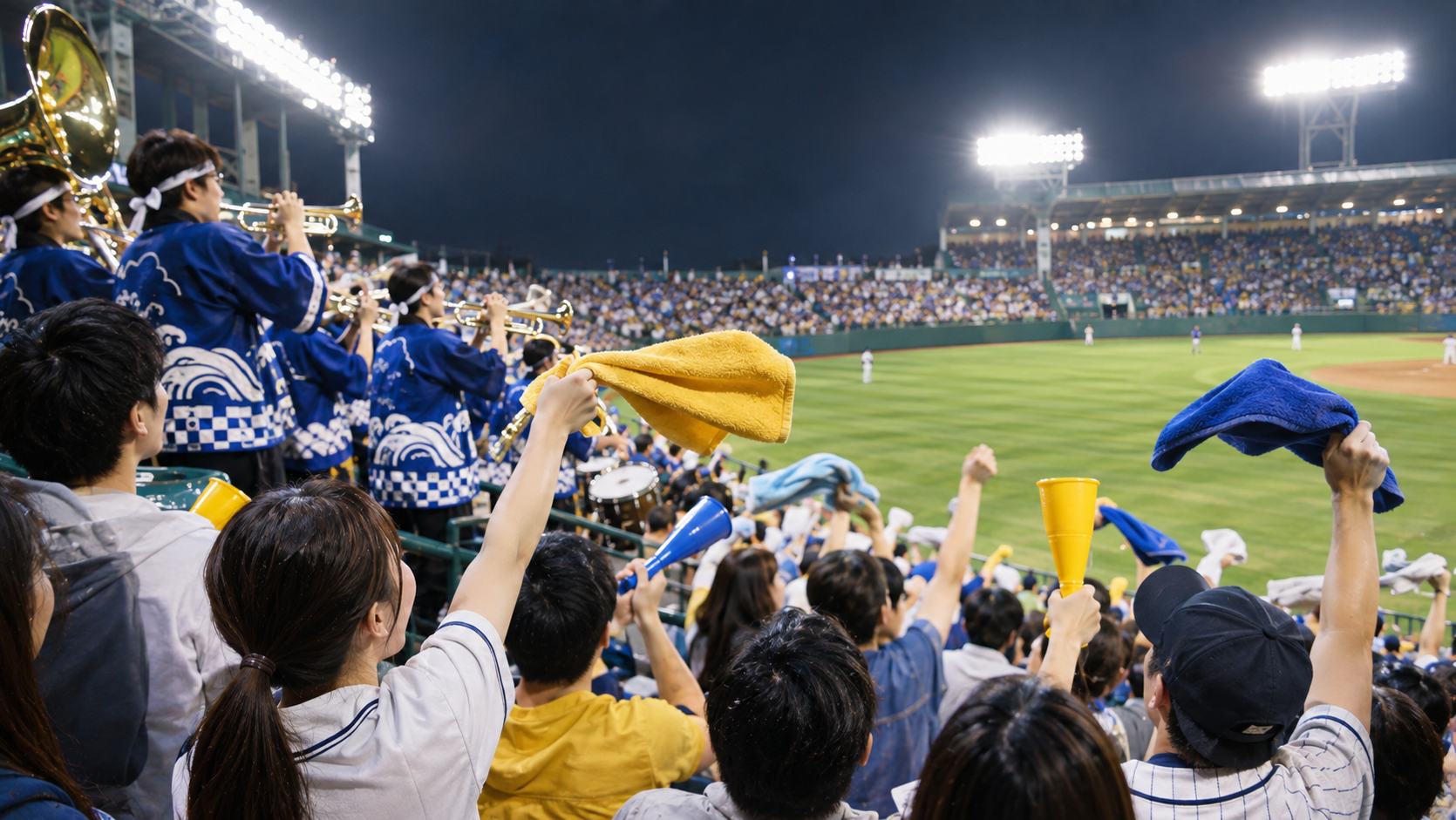
Ask someone in Japan about sports and the answer will very likely be 野球 (yakyū) “baseball”. Baseball arrived in Japan in the 1870s and has been the country’s favorite sport for generations.
Professional baseball: NPB
Nippon Professional Baseball (NPB) has 12 teams in two leagues, the Central League and the Pacific League, and the champions meet in the Japan Series every autumn. Going to a game is an experience in itself: each team has its own cheering section, the 応援団 (ōendan), with trumpets, drums and a song for every player. Fans sing, chant and wave towels for nine innings, and in Kōshien Stadium, Tigers fans release thousands of balloons in the seventh inning.
熱狂的な野球ファンが、東京ドームに集まった。 – Enthusiastic baseball fans gathered at Tokyo Dome.
Kōshien: high school baseball fever
Every August, the national high school baseball tournament takes over Japan. Teams from every prefecture play at Hanshin Kōshien Stadium near Osaka, games are broadcast live on national TV, and players famously take home a little bag of the stadium’s dirt after their last game. There’s a spring tournament at Kōshien too, but the summer one is the national obsession.
On the world stage
Japan won the World Baseball Classic three times (2006, 2009 and 2023), and Japanese stars like Shohei Ohtani are now household names in the US as well.
Learn more in Top 5 Things You Need to Know About Japanese Baseball.
3. Giants vs Tigers: The Rivalry That Divides Japan
The matchup between the Yomiuri Giants and the Hanshin Tigers is known as 伝統の一戦 (dentō no issen), “the traditional match.” It’s Tokyo against Kansai: the capital’s most successful team against the passionate, underdog spirit of the Osaka–Kobe area. When these two meet, stadiums sell out and fans on both sides sing louder than ever.
Want to start a conversation? Try these:
- どのチームを応援していますか? (dono chīmu o ōen shite imasu ka?) “Which team do you support?”
- タイガースのファンです。 (Taigāsu no fan desu.) “I’m a Tigers fan.”
- 今日は巨人と阪神の試合ですね! (kyō wa Kyojin to Hanshin no shiai desu ne!) “It’s Giants vs Tigers today!” Fans often call the Giants 巨人 (Kyojin).
Discover more famous matchups in Top 5 Sports Rivalries in Japan.
4. Sumo (相撲): Japan’s Ancient Sport
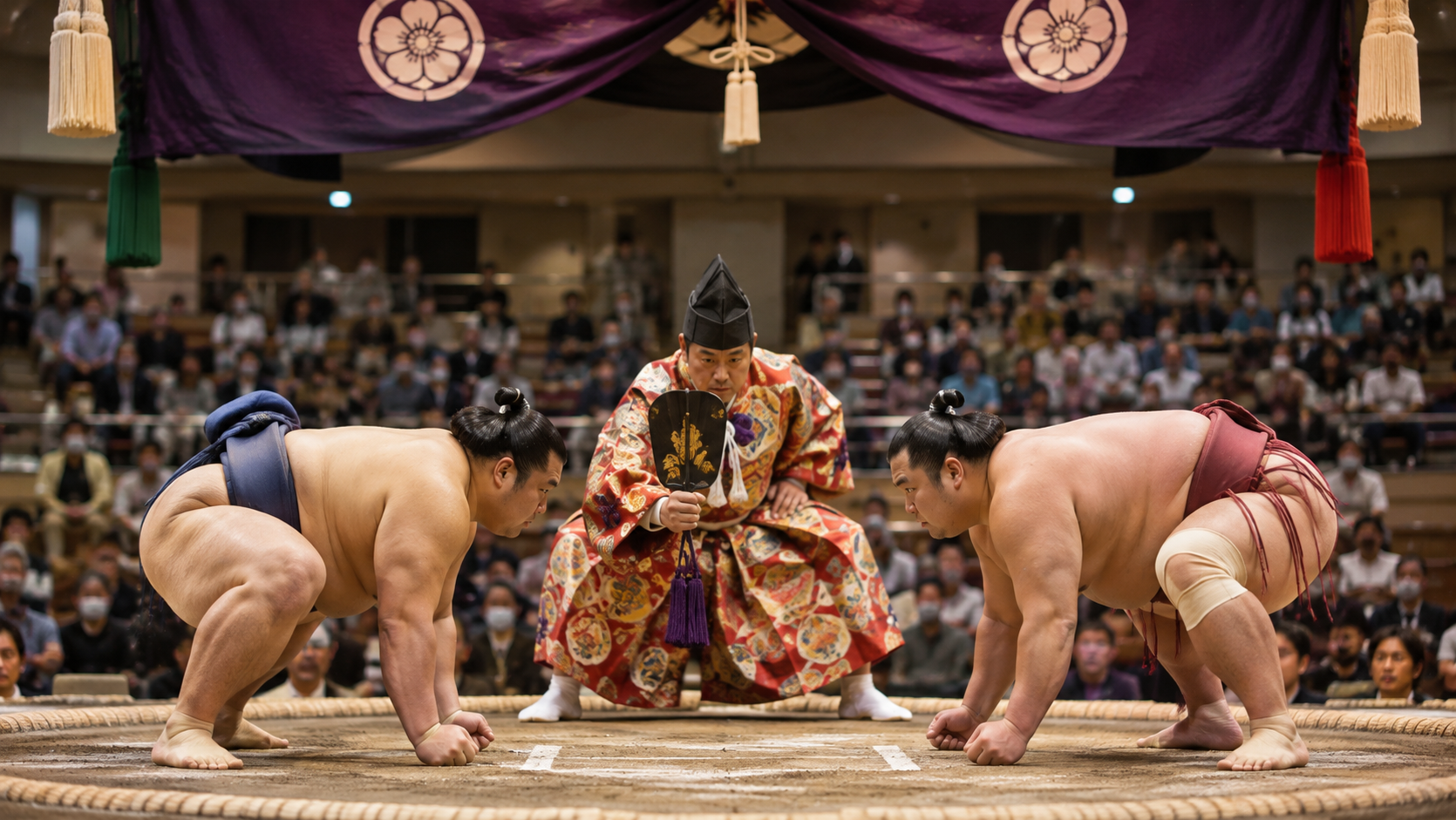
相撲 (sumō) “sumo” is often called Japan’s national sport, and it’s full of history and ritual. Two wrestlers, 力士 (rikishi), face each other in a ring called the 土俵 (dohyō). The first to step out of the ring, or to touch the ground with anything but the soles of his feet, loses. A bout can be over in seconds.
- Six grand tournaments a year: each 本場所 (honbasho) lasts 15 days. Three are held in Tokyo, at the Ryōgoku Kokugikan, in January, May and September.
- Rituals: before each bout, wrestlers stomp and throw salt to purify the ring.
- Ranks: the highest rank is 横綱 (yokozuna) “grand champion”, a title fewer than 80 wrestlers have reached in sumo’s long history.
横綱 – grand champion
Planning a trip? Tickets sell out fast, but a morning visit to watch the lower-ranked wrestlers is a great, relaxed way to see sumo live. Learn more in Top 5 Things You Need to Know About Sumo.
5. Soccer and the Other Sports Japan Loves
Soccer (サッカー): a close second
サッカー (sakkā) “soccer” boomed after the professional J.League started in 1993, and Japan co-hosted the 2002 World Cup with South Korea. The men’s national team is nicknamed “Samurai Blue,” and the women’s team, “Nadeshiko Japan,” won the Women’s World Cup in 2011.
サッカー – soccer
Ekiden, marathons and more
Japan loves long-distance running. Every January 2 and 3, millions watch the Hakone Ekiden, a two-day university relay race between Tokyo and Hakone. Big city races like the Tokyo Marathon, マラソン (marason), draw huge crowds too.
東京マラソンに参加します。 – I will participate in the Tokyo Marathon.
Japan has also hosted the Olympics several times: Tokyo in 1964 and 2020 (held in 2021), plus the Winter Games in Sapporo (1972) and Nagano (1998), and the 2019 Rugby World Cup.
6. Martial Arts: Born in Japan
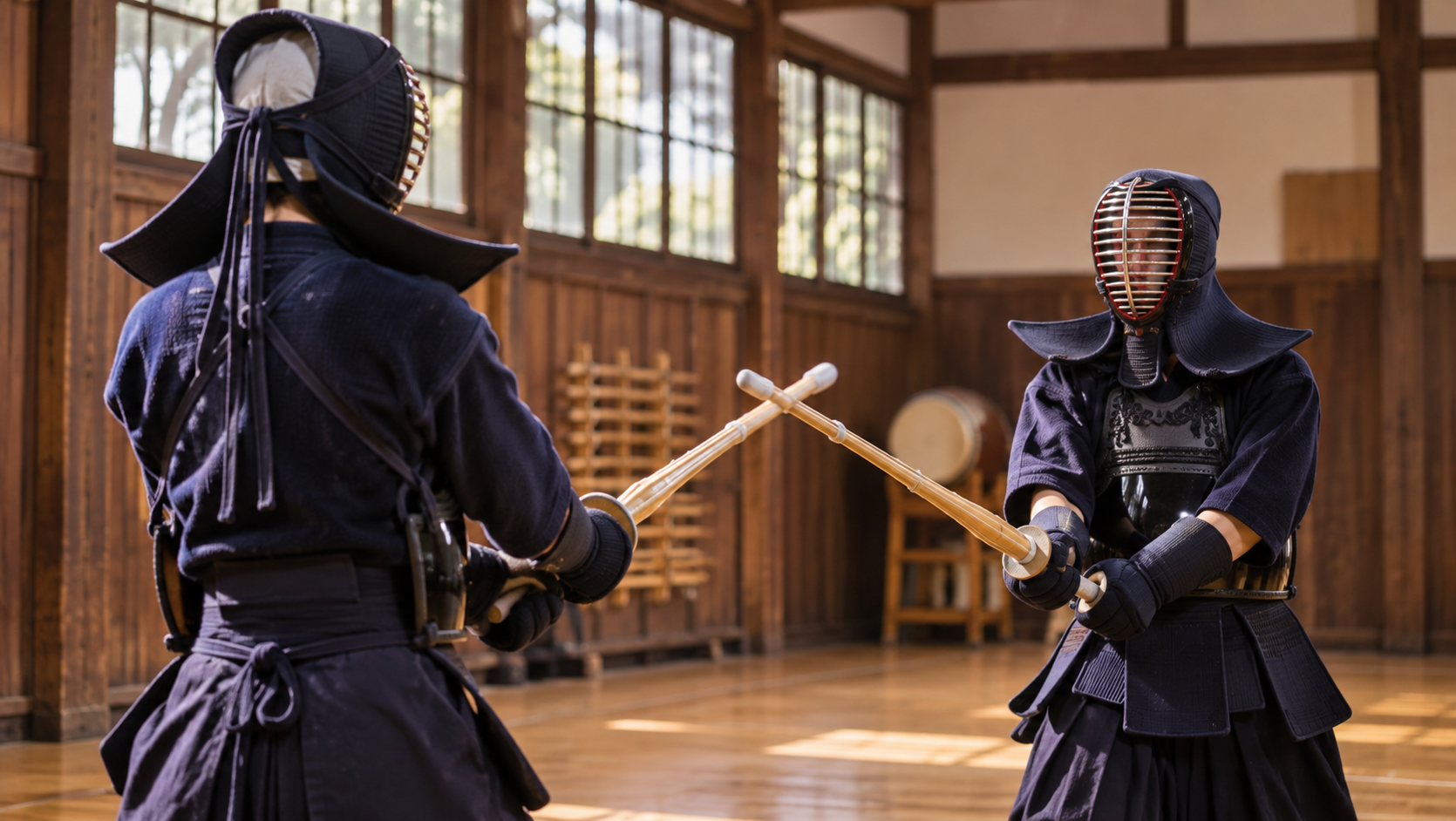
Some of the world’s most popular martial arts come from Japan, and many Japanese students practice one at school:
- 柔道 (jūdō) “judo”: created in Tokyo in 1882, it became an Olympic sport at the 1964 Tokyo Games.
- 剣道 (kendō) “kendo”: “the way of the sword,” practiced with bamboo swords and protective armor.
- 空手 (karate): developed in Okinawa, it made its Olympic debut at Tokyo 2020.
柔道 – judo
See kendo up close in the video lesson Introduction to Kendo.
7. Joining the Conversation: Cheers and Small Talk
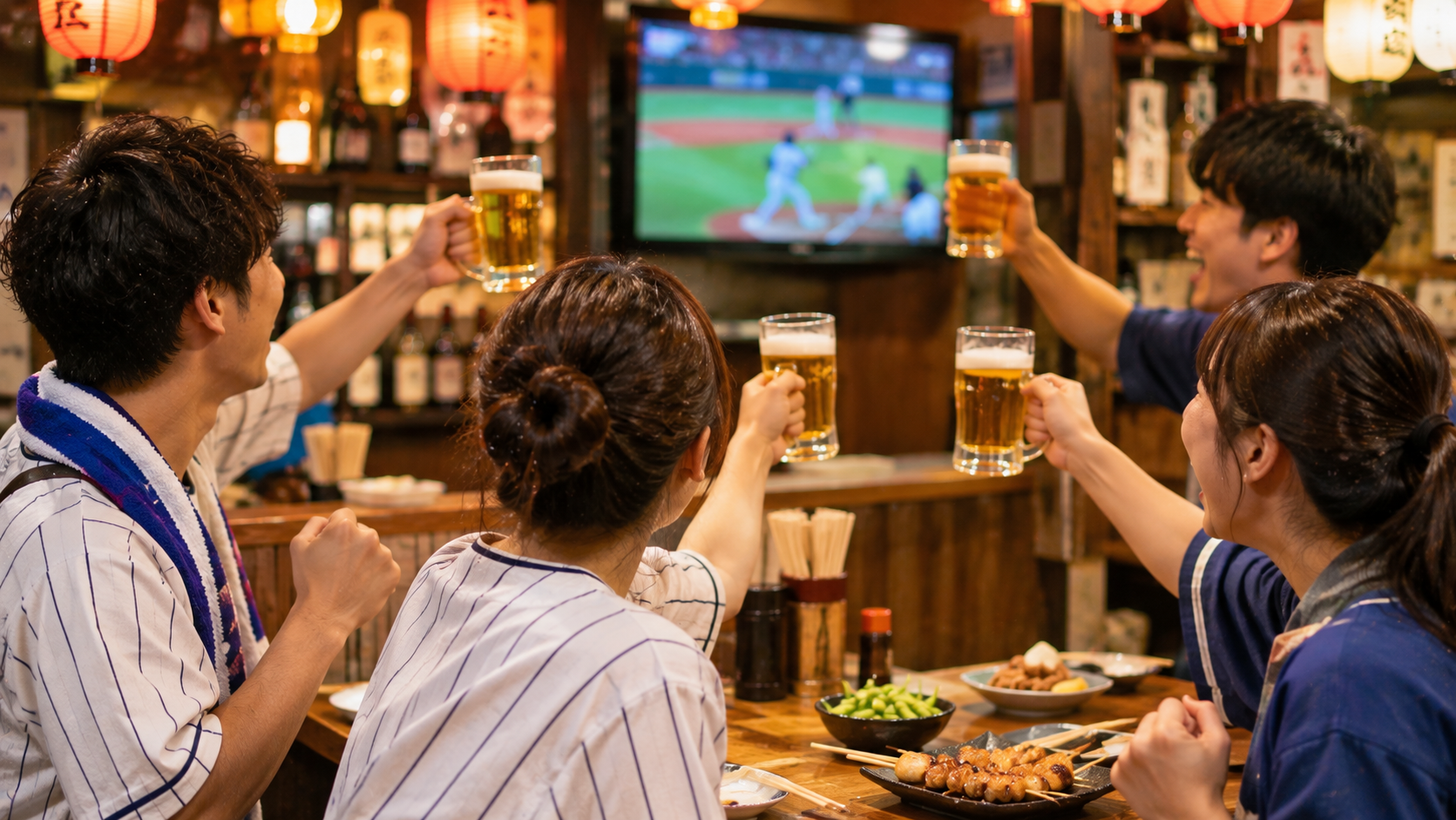
You know the teams and the traditions. Here’s what to say when you’re watching a game with Japanese friends:
- がんばれ! (ganbare!) “Go! You can do it!” The number-one cheer in Japan, for any team or player.
- やった! (yatta!) “Yes! We did it!” When your team scores or wins.
- 惜しい! (oshii!) “So close!” For a near miss.
- ナイスプレー! (naisu purē!) “Nice play!”
- 今日の試合、どうでしたか? (kyō no shiai, dō deshita ka?) “How was today’s game?” Perfect the morning after a big game.
- 試合を見に行きませんか? (shiai o mi ni ikimasen ka?) “Would you like to go see a game?”
みんな、頑張れ! – Everyone, do your best!
Learn how to invite friends to play in Do You Want to Come and Play Japanese Sports with Us?.

Want to hear the words in action? Watch 5 Most Popular Sports, one of JapanesePod101’s most-watched vocabulary videos.
Talk sports in Japanese before your next trip
JapanesePod101 teaches you real Japanese with audio and video lessons from native teachers. Start with the sports and culture lessons for free.
Start Learning for Free8. Quiz: Are You Ready for Game Day?
Cover the cheat sheet and test yourself. Tap an answer to see if you’re right.
Question 1. What’s the Japanese word for “baseball”?
A. 相撲 (sumō)
✗ Not quite. Try another answer.
B. 野球 (yakyū)
✓ Correct! 野球 (yakyū) literally means “field ball.”
C. 試合 (shiai)
✗ Not quite. Try another answer.
Question 2. Which two baseball teams play the famous “traditional match”?
A. Giants and Tigers
✓ Correct! Yomiuri Giants vs Hanshin Tigers is Japan’s classic rivalry, Tokyo against Kansai.
B. Giants and Carp
✗ Not quite. Try another answer.
C. Tigers and Hawks
✗ Not quite. Try another answer.
Question 3. What is 甲子園 (Kōshien) famous for?
A. Sumo tournaments
✗ Not quite. Try another answer.
B. The national high school baseball tournament
✓ Correct! Every summer, the whole country follows the high school tournament at Hanshin Kōshien Stadium.
C. The Tokyo Marathon
✗ Not quite. Try another answer.
Question 4. What’s the highest rank in sumo?
A. 力士 (rikishi)
✗ Not quite. Try another answer.
B. 監督 (kantoku)
✗ Not quite. Try another answer.
C. 横綱 (yokozuna)
✓ Correct! 横綱 (yokozuna) is the grand champion rank. 力士 (rikishi) means any sumo wrestler.
Question 5. Your team just missed scoring by a few centimeters. What do you shout?
A. 惜しい!(oshii!)
✓ Correct! 惜しい! means “So close!”, perfect for a near miss.
B. やった!(yatta!)
✗ Not quite. Try another answer.
C. 引き分け (hikiwake)
✗ Not quite. Try another answer.
9. Japanese Sports FAQ
What is the most popular sport in Japan?
Baseball (野球, yakyū) is the most popular sport in Japan, followed by soccer (サッカー, sakkā). Sumo is considered the traditional national sport.
What is the biggest sports rivalry in Japan?
The Yomiuri Giants vs the Hanshin Tigers in baseball, known as 伝統の一戦 (dentō no issen), “the traditional match.”
When can you watch sumo in Tokyo?
Three of the six grand sumo tournaments are held at the Ryōgoku Kokugikan in Tokyo, in January, May and September. Each lasts 15 days.
How do you say “Which team do you support?” in Japanese?
どのチームを応援していますか? (dono chīmu o ōen shite imasu ka?). To answer, say ~のファンです (~ no fan desu), “I’m a fan of ~.”
Final Thoughts
With these words and this context, you’re ready for your first game in Japan. Before you go, check yourself:
Can you…?
✓Name Japan’s most popular sports and two famous baseball teams?
✓Explain why Giants vs Tigers matters?
✓Ask どのチームを応援していますか? and answer with ~のファンです?
✓Cheer with がんばれ!, celebrate with やった! and react to a near miss with 惜しい!?
✓Describe sumo in one sentence and say when the Tokyo tournaments are held?
Keep going with the Koshien lesson The Kōshien Tournament and High School Baseball (advanced).
Learn Japanese the fun way
From the ballpark to the izakaya, JapanesePod101 has thousands of audio and video lessons that prepare you for real conversations in Japan.
Sign Up for FreeYour turn: baseball at Kōshien or sumo at the Kokugikan, which would you see first, and why? Tell us in the comments, in Japanese if you can!